Pontiac Wiki Pontiac Wiki

Campaign Templates

Campaign Templates

  • Use a Campaign Template to Create a New Campaign
  • Create a Campaign Template
  • Find and Manage Campaign Templates
  • Edit a Campaign Template
  • Clone a Campaign Template
  1. Home
  2. Bidder Documentation
  3. Templates
  4. Campaign Templates

Use a Campaign Template to Create a New Campaign

Saved Campaign Templates can be used to create a new Campaign with a previously configured Campaign structure.

Depending on how the Template was configured, the new Campaign may inherit:

  • Campaign Setup settings
  • Campaign-level Targeting
  • Included Lines and their saved configurations
  • Pacing & Dayparts settings
  • Frequency & Recency settings
  • Applicable Campaign management settings, such as Manage Budgets, Manage Creatives, Manage Dayparts, Programmatic Guaranteed, or Flights

Using a Campaign Template creates a new Campaign based on the saved Template configuration. The resulting Campaign is independent from the Template and can be edited as needed.

To create a new Campaign from a Template:

  1. Navigate to the applicable Advertiser.
  2. Locate the Campaign Templates section within the Campaigns section.
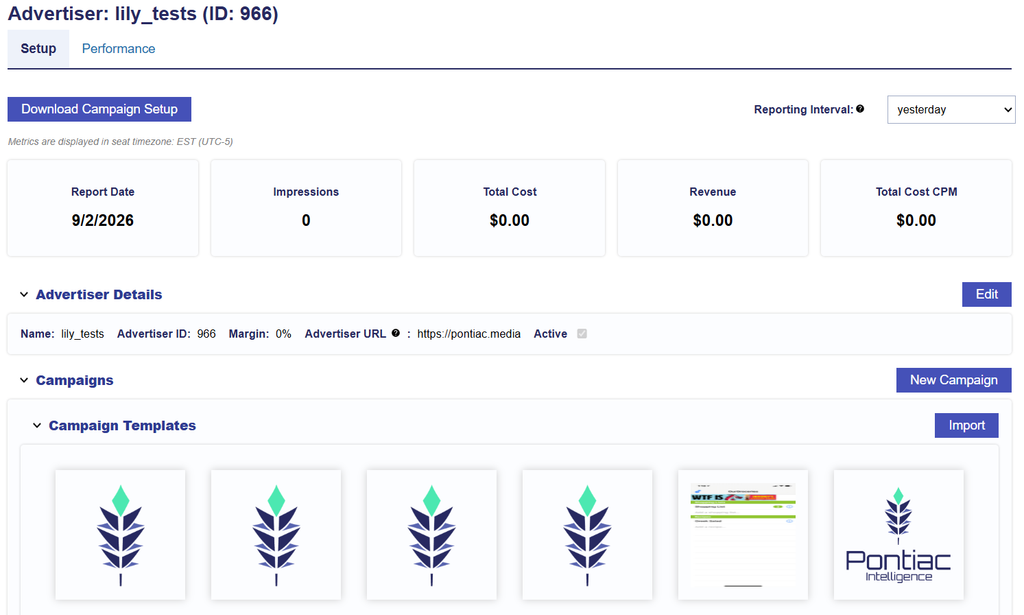
  1. Select the desired Campaign Template Icon.
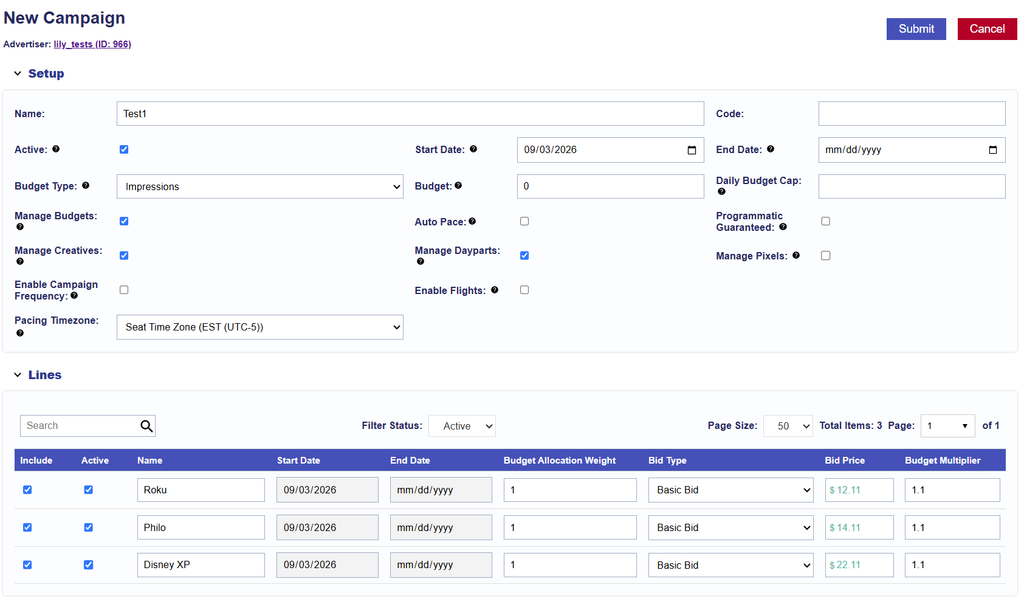
  1. A new Campaign will be created using the settings stored in the Template.
  2. Review the Campaign Setup settings inherited from the Template.
  3. Review any Lines included with the Template and confirm that each Line is appropriate for the new Campaign.
  4. Make any Campaign- or Line-specific adjustments needed for the new strategy.
  5. Select Submit to save the Campaign.

Review the Campaign Before Launch

Templates provide a starting configuration and should always be reviewed before the Campaign is activated.

Confirm the following as applicable:

  • Campaign Setup: Review the Campaign Name, Active Status, Budget Type, management settings, and Pacing Time Zone.
  • Dates and Budgets: Enter or update the Campaign dates and budgets required for the new Campaign.
  • Lines: Confirm that the appropriate Lines were included and remove, add, or edit Lines as needed.
  • Line Budgets and Bids: Review Line budgets, Budget Multipliers, bid settings, and any Advanced Bid Controls.
  • Targeting: Confirm that Campaign- and Line-level Targeting is appropriate for the new Advertiser, Campaign, inventory, geography, and strategy.
  • Deals: Confirm that any saved Deal targeting is still applicable and available for the new Campaign.
  • Pacing & Dayparts: Review the saved pacing strategy, Dayparts, and applicable time zone settings.
  • Frequency & Recency: Confirm that the saved Campaign- and Line-level frequency settings are appropriate.
  • Creatives: Associate the applicable Creatives and confirm that Creative management is configured at the intended Campaign or Line level.
  • Pixels: Associate any required tracking Pixels at the appropriate level.
  • Flights: If Flights are enabled, review Flight dates, budgets, included Lines, and applicable Flight settings.
  • Foot Traffic Reporting: If included on any Lines, review the saved locations and reporting configuration.
  • Active Status: Confirm the Campaign and applicable Lines should be Active before launch.

Important: A Campaign created from a Template does not remain connected to the original Template. Changes made to the Campaign do not update the Template, and future changes to the Template do not update Campaigns that were previously created from it.

For information on updating the reusable configuration itself, see Edit a Campaign Template.

Create a Campaign Template

Campaign Templates can be created from an existing Campaign or from a newly configured Campaign. Save a Campaign as a Template when its structure or multi-Line strategy is expected to be reused.

To save a Campaign as a Template:

  1. Open the Campaign you want to use as the basis for the Template, or create and configure a new Campaign.
  2. Select Save as Template in the upper-right corner.
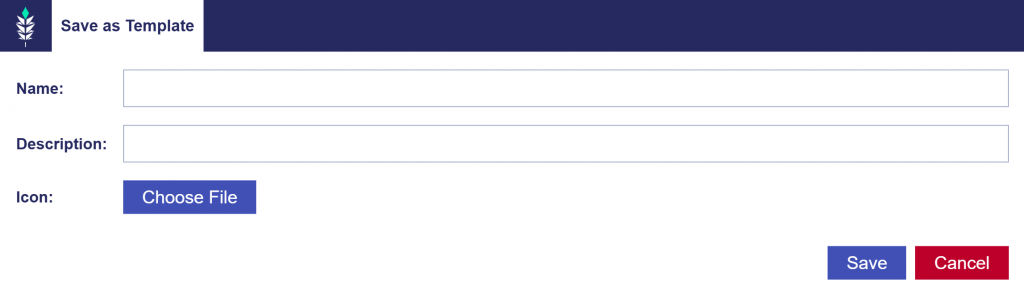
  1. Enter a Name, Description, and Icon for the Campaign Template. Name and Icon are required fields.
  1. Select Save.

All Lines from the source Campaign are included in the Campaign Template by default. Included Lines can be managed after the Template is saved under Templates > Campaign Templates.

The Campaign Template is then available for future Campaign creation and can be managed from the Seat-level Templates tab.

For instructions on using the Template, see Use a Campaign Template to Create a New Campaign.

Find and Manage Campaign Templates

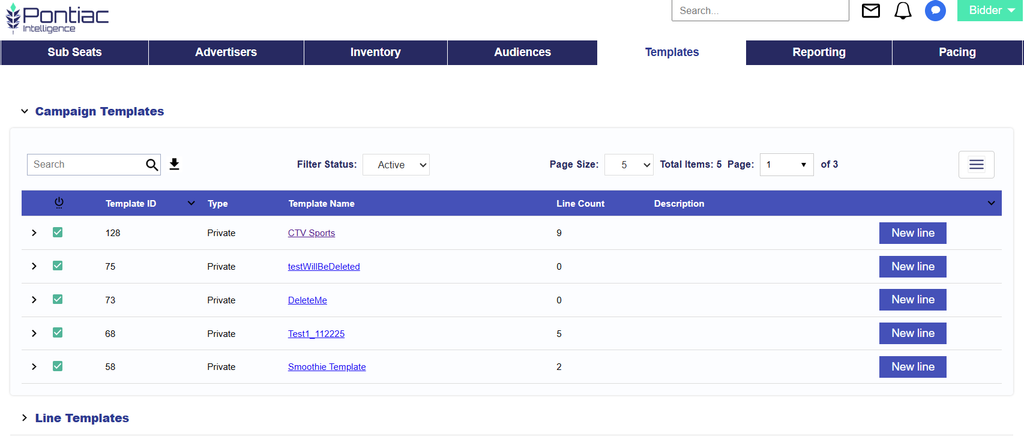
Saved Campaign Templates are managed at the Seat level from the Templates tab.

Use this area to locate existing Campaign Templates, review their saved configuration, update the Template for future Campaign creation, or create a new Template variation by cloning an existing one.

Find a Campaign Template

To locate an existing Campaign Template:

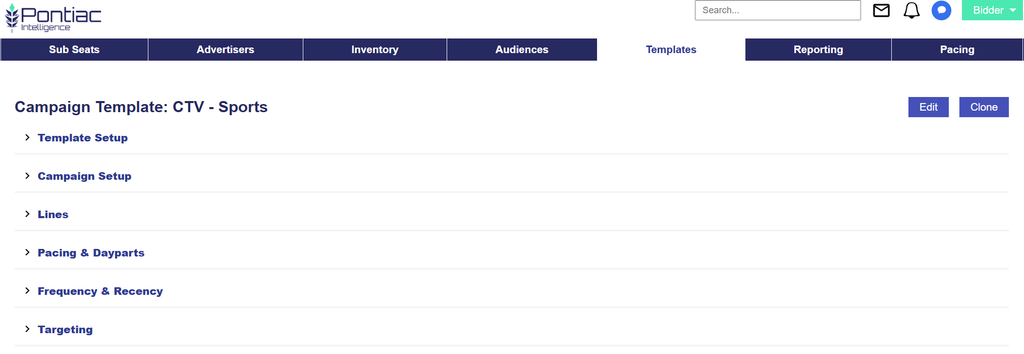
  1. Navigate to the Templates tab.
  2. Expand the Campaign Templates section.
  3. Locate the Template by its Name, ID, or Description.
  1. Select the Template Name to open the Campaign Template.

Review a Campaign Template

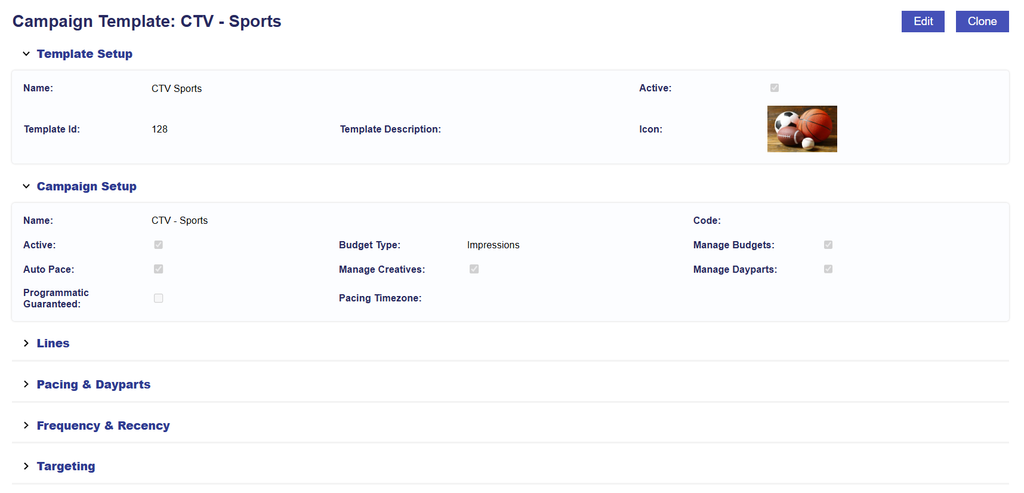
Opening a Campaign Template allows users to review the configuration that will be applied when the Template is used to create a new Campaign.

Depending on the Template configuration, this can include:

  • Template Setup
  • Campaign Setup
  • Included Lines
  • Campaign-level Targeting
  • Pacing & Dayparts
  • Frequency & Recency
  • Other applicable Campaign settings

Reviewing the Template before use can help confirm that the saved configuration still reflects the intended Campaign structure and strategy.

  • View the saved Campaign configuration.
  • Edit the Template to update its configuration.
  • Clone the Template to create a new variation while preserving the original.

Changes made to a saved Campaign Template are used when the Template is selected for future Campaign creation. They do not modify Campaigns that were previously created from the Template.

Template Setup

Template Setup controls the saved Template itself. These fields describe and manage the reusable Template as an object in the Templates section.

It includes:

  • Name: The name used to identify the Campaign Template.
  • Active Status: Whether the Campaign Template itself is Active or Inactive.
    • Template Setup > Name / Active Status = the saved Template.
  • Template Description: Describes the intended purpose or strategy of the Template.
  • Icon: The visual identifier used to recognize the Template.

These settings are about how the Template is identified and managed, not the Campaign that will eventually be created from it. Pasted text

Campaign Setup

Campaign Setup controls the Campaign configuration stored inside the Template. These are the settings that will be used as the starting configuration when the Template is selected to create a new Campaign.

It includes settings such as:

  • Name
  • Code
  • Budget Type
  • Active Status
    • Campaign Setup > Name / Active Status = the new Campaign configuration created from that Template.
  • Manage Budgets
  • Auto Pace
  • Manage Creatives
  • Manage Dayparts
  • Programmatic Guaranteed
  • Enable Flights
  • Pacing Time Zone

Manage a Campaign Template

From the Campaign Template page, users can:

  • View the saved Campaign configuration.
  • Edit the Template to change the configuration that will be used for future Campaigns.
  • Manage Included Lines to control which Line structures are recreated with the Campaign.
  • Clone the Template to create a new reusable variation while preserving the original.

When editing a Campaign Template, changes are saved to the Template itself and are used the next time the Template is selected to create a Campaign.

Important: Changes made to a Campaign Template do not update Campaigns that were previously created from it. Likewise, changes made to an individual Campaign created from a Template do not update the original Template.

Edit vs. Clone

Use Edit when the existing Template should be updated for future use.

Use Clone when a new Template variation is needed but the original Template should remain unchanged.

For example, cloning can be useful when creating a second version of an existing Campaign strategy with different Targeting, Lines, pacing settings, or other configuration while preserving the original Template.

For detailed instructions on modifying a saved Template, see Edit a Campaign Template.

For instructions on creating a variation of an existing Template, see Clone a Campaign Template.

Edit a Campaign Template

Editing a Campaign Template updates the configuration that will be used when the Template is selected to create future Campaigns.

Changes made to a Campaign Template do not update Campaigns that were previously created from that Template.

To edit a Campaign Template:

  1. Navigate to Templates > Campaign Templates.
  2. Open the applicable Campaign Template.
  3. Select Edit.
  4. Update the applicable Template sections.
  5. Select Submit to save all changes.

Template Setup

The Template Setup section controls the Template itself, including how it is identified and displayed within the Templates section.

Available fields include:

  • Name: A unique name used to identify the Campaign Template.
  • Active Status: Determines whether the Campaign Template itself is Active or Inactive.
  • Template Description: Describes the intended purpose or strategy of the Template.
  • Icon: Provides a visual identifier that can make the Template easier to recognize.

These settings apply to the saved Template, not to the Campaign created from it.

Campaign Setup

The Campaign Setup section controls the Campaign configuration stored within the Template and used when creating a new Campaign.

Available fields include:

  • Name: The Campaign Name that will be used as part of the Template configuration.
  • Code: Optional and for reporting purposes.
  • Budget Type: Spend or Impressions
  • Active Status: Determines whether Campaigns created from the Template are Active or Inactive.
  • Manage Budgets: When enabled, Lines included in the Campaign will follow the Campaign Start Date, End Date, and Budget Type. Budgets are allocated to Lines by weights.
  • Auto Pace: Enables automatic Campaign pacing by allowing Line budgets to remain fluid between Lines, helping the Campaign achieve its overall pacing goal.
  • Manage Creatives: Allows Creatives to be managed at the Campaign level.
  • Manage Dayparts: Allows pacing and daypart settings to be managed at the Campaign level.
  • Programmatic Guaranteed:Configures the Campaign for Programmatic Guaranteed delivery. Enabling this option removes previously configured targeting or settings that are not applicable to PG Campaigns. Publisher-side Deal configuration controls targeting and delivery.
  • Enable Flights: Allows Campaign flights to be configured with Start Dates, End Dates, budgets, and applicable rollover settings.
  • Pacing Timezone: Defines the time zone used for Campaign pacing.

Note: The Name and Active Status fields appear in both Template Setup and Campaign Setup, but they control different things. Template Setup applies to the reusable Template itself, while Campaign Setup applies to the Campaign configuration stored within the Template.

For complete definitions and behavior of these settings, see Campaign Setup.

Lines

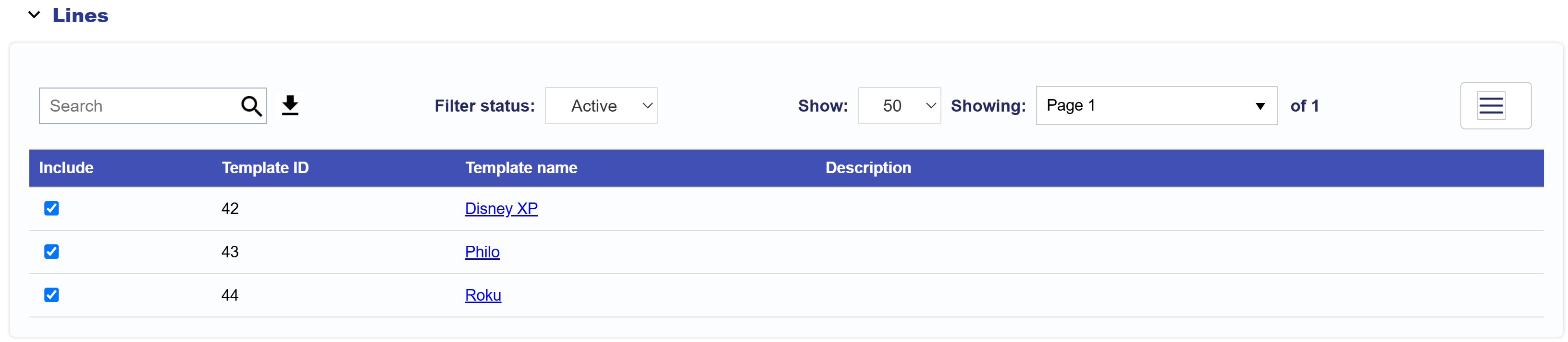
The Lines section determines which Lines from the source Campaign are included when the Campaign Template is used to create a new Campaign.

Campaign Templates include all Lines from the source Campaign by default. Use this section to remove Lines that should not be recreated with the Template.

To manage included Lines:

  1. Navigate to the Lines section.
  2. Check Include next to each Line that should remain part of the Template.
  3. Uncheck Include next to any Line that should not be included.
  4. Select Submit when all Template edits are complete.

Use included Lines when the same multi-Line strategy should be recreated together.

Pacing & Dayparts Section

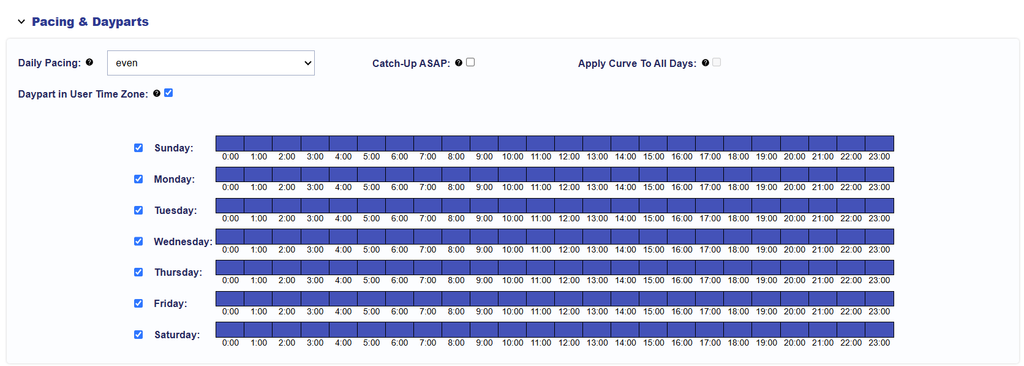
If Manage Dayparts is enabled in the Campaign Setup section of the Template, Campaign-level Pacing & Dayparts settings can be stored and edited within the Template.

To update these settings:

  1. Navigate to the Pacing & Dayparts section within the Campaign Template.
  2. Update the applicable pacing and Daypart settings.
  3. Select Submit when all Template edits are complete.

The saved Pacing & Dayparts configuration will be used as the starting configuration when the Template is used to create a new Campaign.

For complete definitions and configuration options, see Pacing & Dayparts.

Frequency & Recency Section

If Enable Campaign Frequency is enabled in the Campaign Setup section of the Template, Campaign-level Frequency & Recency settings can be stored and edited within the Template.

To update these settings:

  1. Navigate to Frequency & Recency.
  2. Update the applicable Frequency & Recency settings.
  3. Select Submit when all Template edits are complete.

The saved configuration will be applied as the starting Campaign-level Frequency & Recency settings when a new Campaign is created from the Template.

For complete definitions and configuration options, see Frequency & Recency.

Targeting Section

The Targeting section controls the Campaign-level Targeting stored within the Template.

To update Campaign-level Targeting:

  1. Navigate to the Targeting section within the Campaign Template.
  2. Select Edit Targeting.
  3. Update the applicable targeting settings.
  4. Select Save in the targeting window.
  5. Select Submit when all Template edits are complete.

Targeting stored in the Template is copied into the new Campaign when the Template is used.

Important: Review saved Targeting whenever a Template is reused. Targeting that was appropriate for the original Campaign may not be appropriate for a different Advertiser, geography, Deal, inventory strategy, or Campaign objective.

For details on available Targeting options, see Targeting Methods.

Clone a Campaign Template

Cloning allows users to create a new Campaign Template based on an existing Template without modifying the original.

Use Clone when you want to create a reusable variation of an existing Campaign Template, such as a version with different Campaign settings, included Lines, Pacing & Dayparts, Frequency & Recency, or Targeting.

To clone a Campaign Template:

  1. Navigate to Templates > Campaign Templates.
  2. Open the Campaign Template you want to clone.
  3. Select Clone.
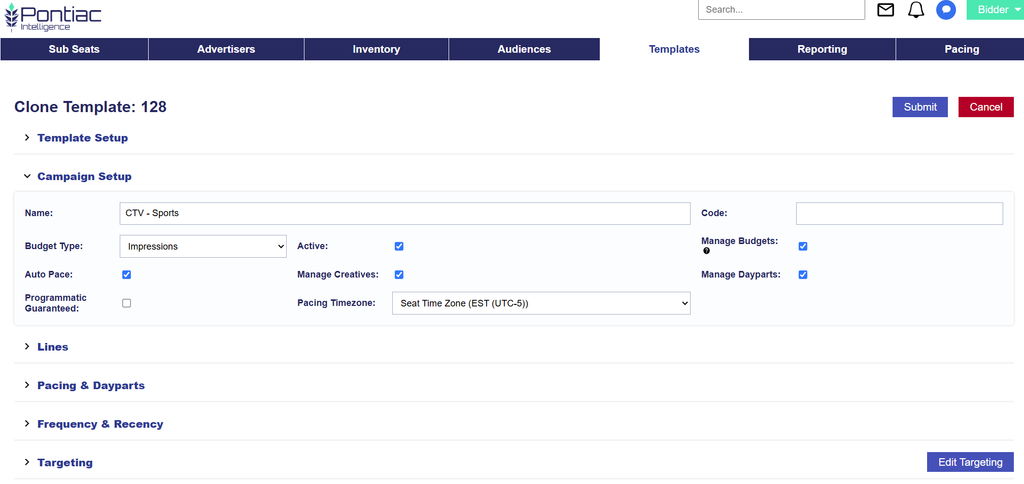
  4. The Clone Template page will open with the existing Template configuration copied into the new Template.
  5. Update the Template Setup information so the cloned Template can be distinguished from the original.
  6. Review each applicable section and make any changes needed for the new Template variation.
  7. Select Submit to save the cloned Template.

From the Clone Template page, users can review and update:

  • Template Setup: Update the Template Name, Description, Icon, or Active Status.
  • Campaign Setup: Review the Campaign Name, Code, Budget Type, Active Status, Manage Budgets, Auto Pace, Manage Creatives, Manage Dayparts, Programmatic Guaranteed, and Pacing Time Zone settings.
  • Lines: Review which Lines should be included in the cloned Template.
  • Pacing & Dayparts: Update Campaign-level pacing or Daypart settings when applicable.
  • Frequency & Recency: Update Campaign-level Frequency & Recency settings when applicable.
  • Targeting: Select Edit Targeting to review or change the Campaign-level Targeting stored in the cloned Template.

    The cloned Campaign Template is saved as a separate Template and can be managed independently from the original.

    Important: Changes made to the cloned Template do not affect the original Template, and changes made to the original Template do not affect the clone.

    Use Clone when you want to create another reusable Template configuration. If you want to create an actual Campaign from an existing Template, use the Campaign creation workflow instead.

    For instructions on creating a Campaign from a Template, see Use a Campaign Template to Create a New Campaign.

    © 2026 Pontiac Wiki Sec · All Rights Reserved · Developed by RDK

    • Contact Us
    • Privacy Policy
    • Terms & Conditions
    • Pontiac.media