Pontiac Wiki Pontiac Wiki

Templates

Templates

  • Overview
  • Campaign Templates
    • Use a Campaign Template to Create a New Campaign
    • Create a Campaign Template
    • Find and Manage Campaign Templates
    • Edit a Campaign Template
    • Clone a Campaign Template
  • Line Templates
    • Use a Line Template to Create a New Line
    • Public Line Templates
    • Create a Line Template
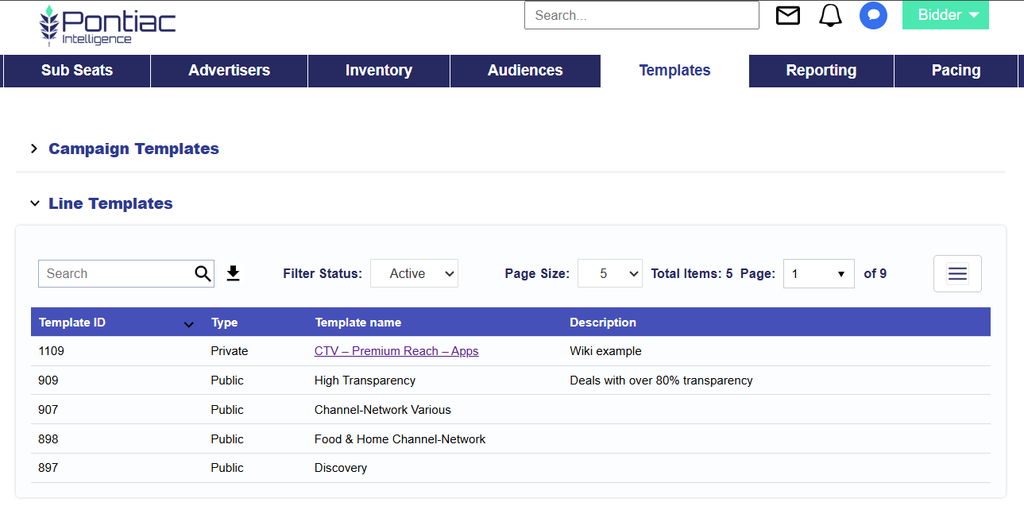
    • Find and Manage Line Templates
    • Edit a Line Template
    • Clone a Line Template
  1. Home
  2. Bidder Documentation
  3. Templates

Overview

Templates allow users to save reusable Campaign and Line configurations so new strategies can be launched more quickly and consistently. Instead of rebuilding the same settings each time, a Template can preserve commonly used setup, targeting, bidding, pacing, and other configuration choices. This can help:

  • Reduce repetitive Campaign and Line setup
  • Maintain consistent targeting and bidding strategies
  • Standardize best practices across users and Advertisers
  • Reduce configuration mistakes
  • Quickly recreate successful Campaign or Line structures
  • Build reusable strategies for specific publishers, inventory types, media types, or Campaign goals

Templates are managed at the Seat level under the Templates tab, where users can view, edit, and clone existing Campaign and Line Templates.
Template Types

Pontiac supports two primary types of Templates:

  • Campaign Templates: Save reusable Campaign configurations and can include selected Lines as part of the Template.
  • Line Templates: Save reusable Line configurations for a specific bidding, inventory, or targeting strategy.

Line Templates can be either:

  • Custom Line Templates: Created by users from existing Lines for reuse across future Campaigns.
  • Public Line Templates: Preconfigured Line Templates created and maintained by Pontiac for common publishers, inventory strategies, and media buying use cases.

Campaign Templates can include Campaign setup, targeting, selected Lines, Pacing & Dayparts, and Frequency & Recency settings.

Line Templates can preserve Line setup, bidding configuration, targeting, Pacing & Dayparts, Frequency & Recency, and Foot Traffic Reporting settings where applicable.

How Templates Work

Build Campaign or Line
↓
Configure desired settings
↓
Save as Template
↓
Manage Template at Seat Level
↓
Reuse Template for future Campaigns or Lines
↓
Review and adjust before launch

Templates provide a starting configuration rather than requiring users to rebuild a strategy from scratch. After creating a Campaign or Line from a Template, review the resulting settings and make any Campaign specific adjustments before launch.

When to Use a Campaign Template vs. Line Template

Campaign Templates

Use a Campaign Template when you want to reuse a broader Campaign structure that may include multiple Lines and Campaign level settings. This is the most common use case.

Common use cases include:

  • Standard Campaign structures used across multiple Advertisers
  • Campaigns that regularly contain the same types of Lines
  • Reusable Campaign-level targeting
  • Standard pacing, Frequency, Creative management, or budget management configurations
  • Multi-Line strategies that should be recreated together

A Campaign Template can include selected Lines within the Template, allowing a larger Campaign structure to be recreated together.

Line Templates

Use a Line Template when you want to reuse an individual media buying or targeting strategy.

Common use cases include:

  • Publisher-specific Lines
  • CTV, OLV, Audio, Display, or Native strategies
  • Reusable Deal targeting
  • Standard Device or Inventory Type configurations
  • Consistent bidding strategies
  • Reusable geographic, content, or inventory targeting

Campaign Templates

Campaign Templates allow users to save and reuse a broader Campaign structure, including applicable Campaign settings, targeting, and selected Lines.

Use a Campaign Template to Create a New Campaign

Saved Campaign Templates can be used to create a new Campaign with a previously configured Campaign structure, including applicable Campaign settings, targeting, and selected Lines.

To create a new Campaign from a Template:

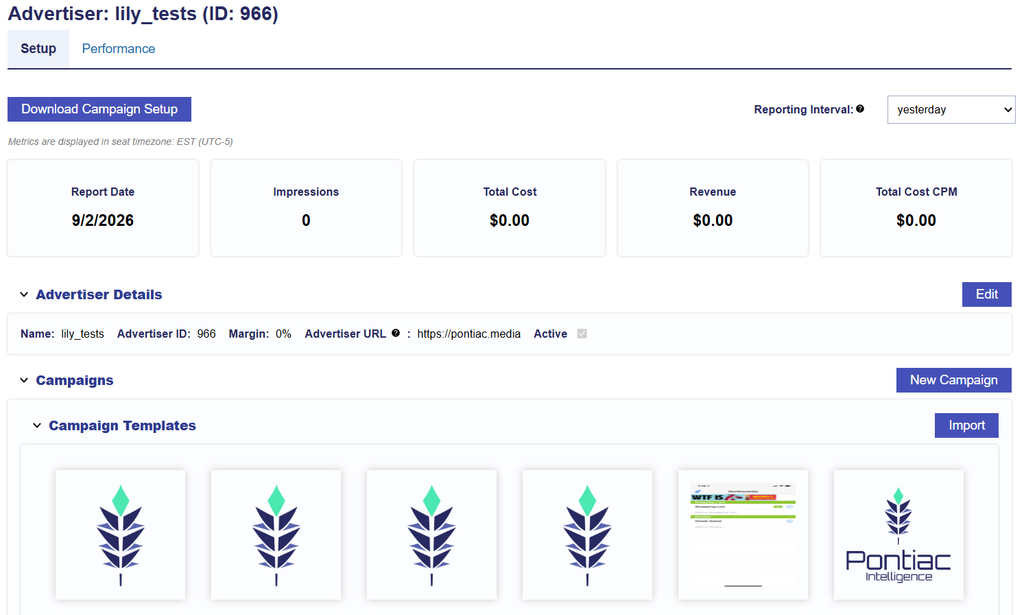
  1. Navigate to the applicable Advertiser.
  2. Locate the Campaign Templates section within the Campaigns section.
  1. Select the desired Campaign Template Icon.
  1. A new Campaign will be created using the settings stored in the Template.
  2. Review the resulting Campaign and included Lines and make any Campaign specific adjustments.
  3. Save the Campaign when configuration is complete.

Templates provide a starting configuration. Before launch, review applicable dates, budgets, targeting, Lines, bids, pacing, frequency settings, Creatives, and other Campaign requirements to confirm they are appropriate for the new Campaign.

Create a Campaign Template

Campaign Templates can be created from an existing Campaign or from a newly configured Campaign. This is useful when a Campaign structure or multi-Line strategy is expected to be reused across future Advertisers or Campaigns.

To save a Campaign as a Template:

  1. Navigate to the Campaign you want to use as the basis for the Template, or create and configure a new Campaign.
  2. Select Save as Template in the upper-right corner.
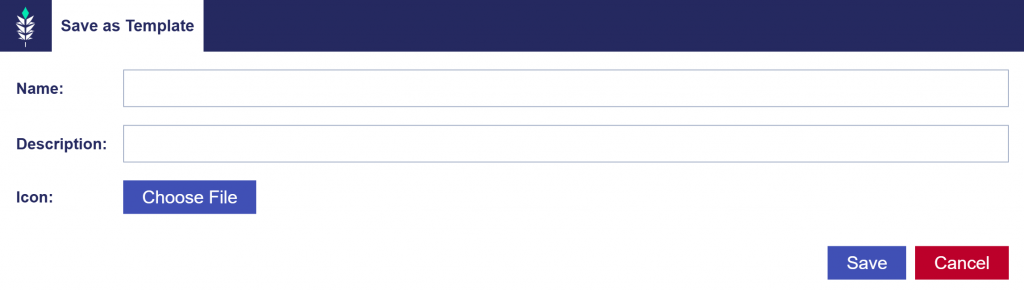
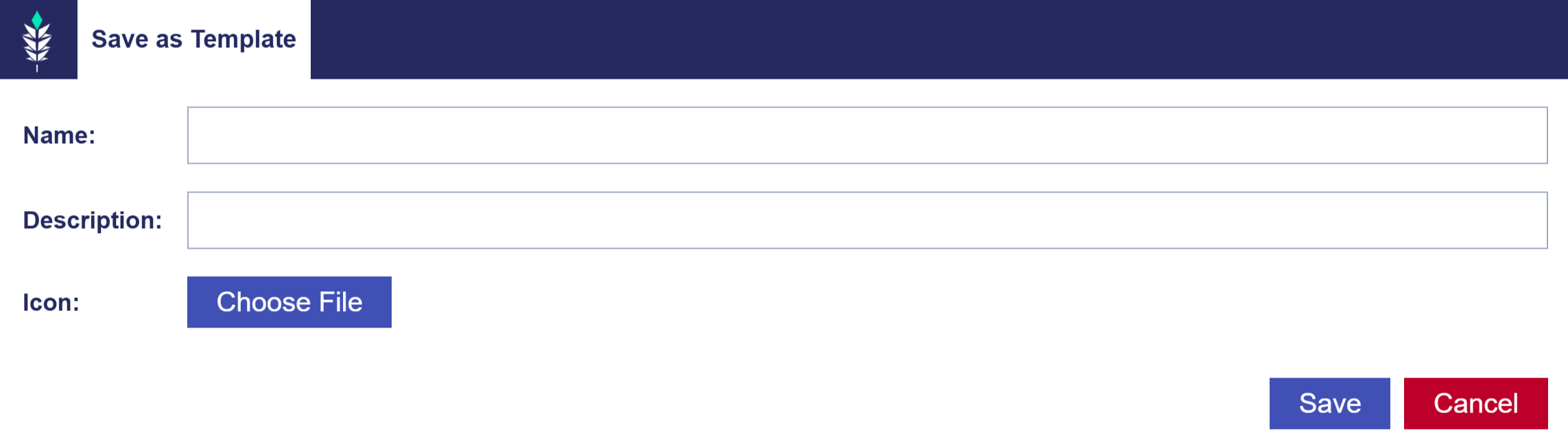
  1. Enter a Name, Description, and Icon for the Campaign Template.
  1. Select Save.

The Campaign Template can now be reused when creating future Campaigns. Saved Campaign Templates are managed at the Seat level under the Templates tab.

For instructions on using the Template, see Use a Campaign Template to Create a New Campaign.

Find and Manage Campaign Templates

Saved Campaign Templates are managed at the Seat level.

To locate an existing Campaign Template:

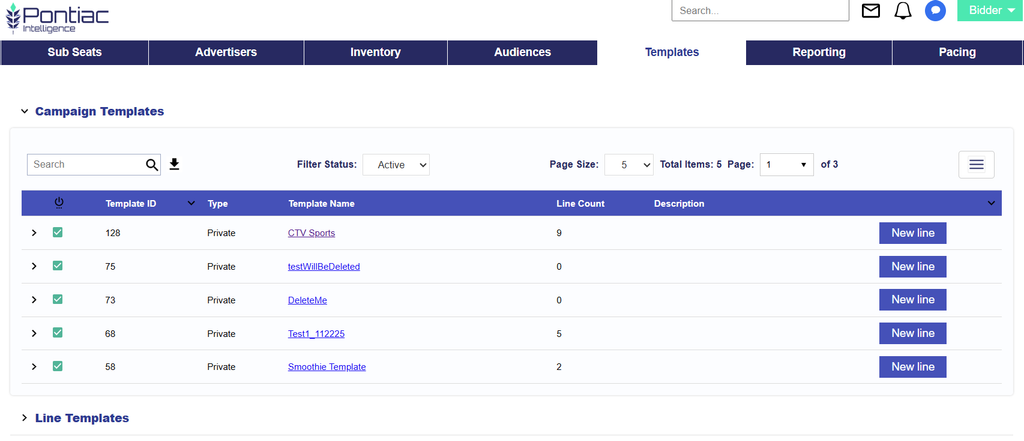
  1. Navigate to the Templates tab.
  2. Expand the Campaign Templates section.
  3. Locate the Template by its Name, ID, or Description.
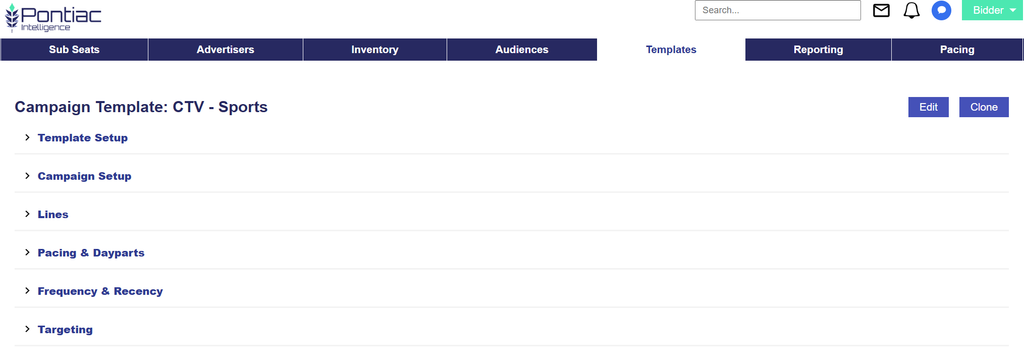
  1. Select the Template Name to open and review its saved configuration.

From the Template page, users can:

  • View the saved Campaign configuration.
  • Edit the Template to update its configuration.
  • Clone the Template to create a new variation while preserving the original.

Changes made to a saved Campaign Template are used when the Template is selected for future Campaign creation. They do not modify Campaigns that were previously created from the Template.

Edit a Campaign Template

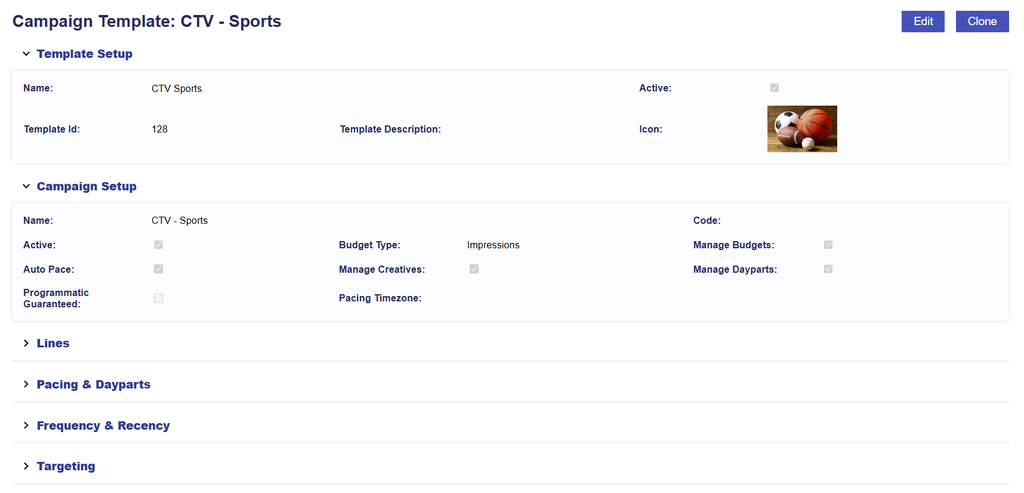
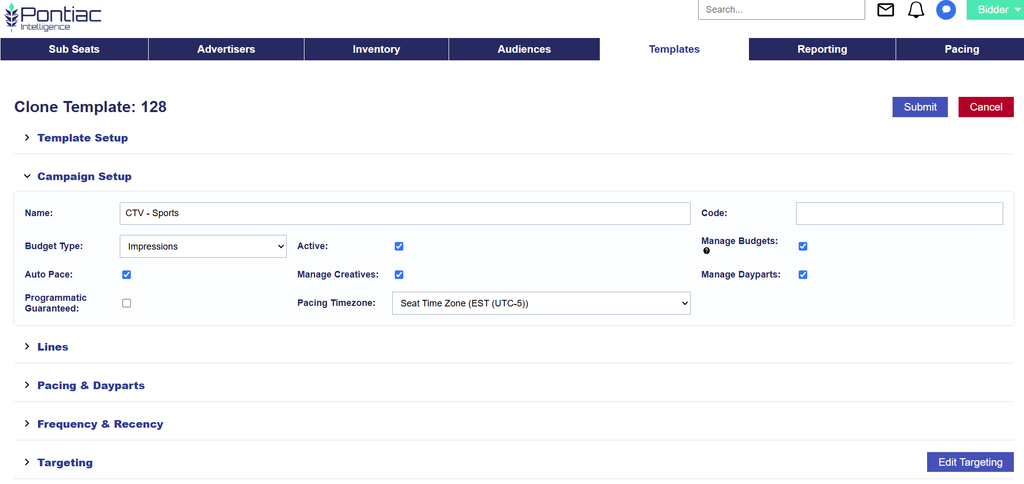
On the Template > Campaign Template page > Select Edit from the applicable Campaign Template to update the configuration that will be used when creating future Campaigns.

Template Setup Section

The Template Setup section controls the Template Settings.

Available fields include:

  • Name: A unique name used to identify the Campaign Template.
  • Active Status: Determines whether the Campaign Template itself is Active or Inactive.
  • Template Description: Describes the intended purpose or strategy of the Template.
  • Icon: Provides a visual identifier that can make the Template easier to recognize.

Campaign Setup Section

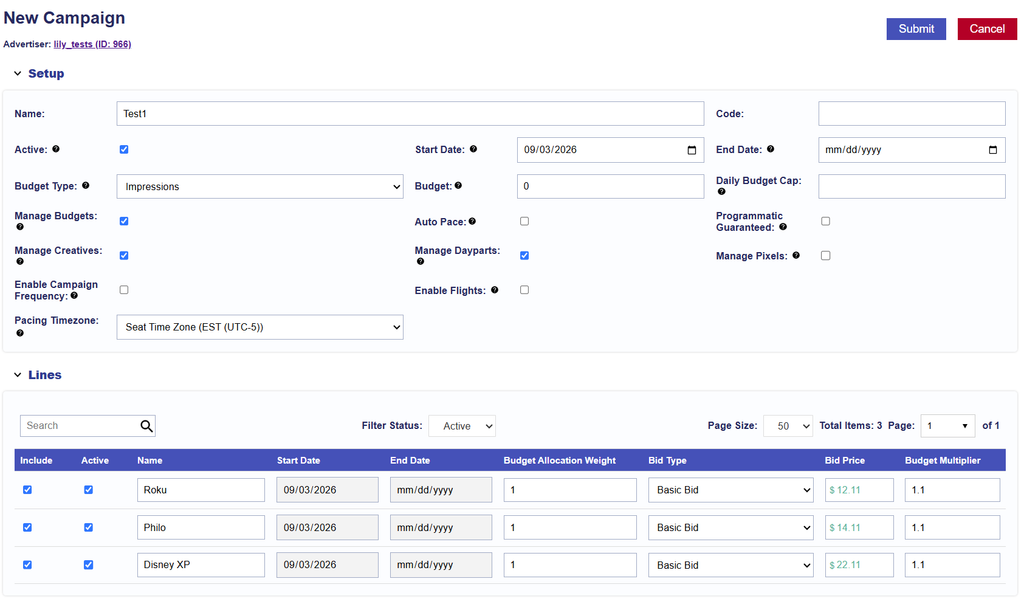
The Campaign Setup section controls the primary Campaign configuration stored in the Template.

Available fields include:

  • Name: A unique name used to identify the Campaign Template.
  • Code: Optional and for reporting purposes.
  • Budget Type: Spend or Impressions
  • Active Status: Determines whether Campaigns created from the Template are Active or Inactive.
  • Manage Budgets: When enabled, Lines included in the Campaign will follow the Campaign Start Date, End Date, and Budget Type. Budgets are allocated to Lines by weights.
  • Auto Pace: Enables automatic Campaign pacing by allowing Line budgets to remain fluid between Lines, helping the Campaign achieve its overall pacing goal.
  • Manage Creatives: Allows Creatives to be managed at the Campaign level.
  • Manage Dayparts: Allows pacing and daypart settings to be managed at the Campaign level.
  • Programmatic Guaranteed:Configures the Campaign for Programmatic Guaranteed delivery. Enabling this option removes previously configured targeting or settings that are not applicable to PG Campaigns. Publisher-side Deal configuration controls targeting and delivery.
  • Enable Flights: Allows Campaign flights to be configured with Start Dates, End Dates, budgets, and applicable rollover settings.
  • Pacing Timezone: Defines the time zone used for Campaign pacing.

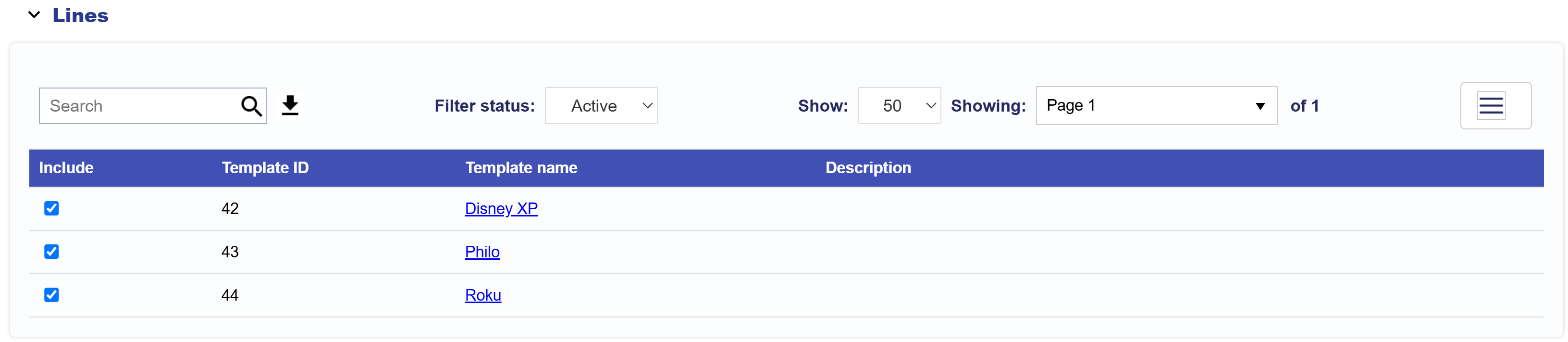
Lines Section

The Lines section determines which Lines from the original Campaign are included when the Campaign Template is used.

Check or uncheck the Include checkbox next to the applicable Lines to control which Line structures are saved as part of the Template.

Including Lines is useful when the same multi-Line strategy should be recreated together. If a Line should not be included in future Campaigns created from the Template, leave it unchecked.

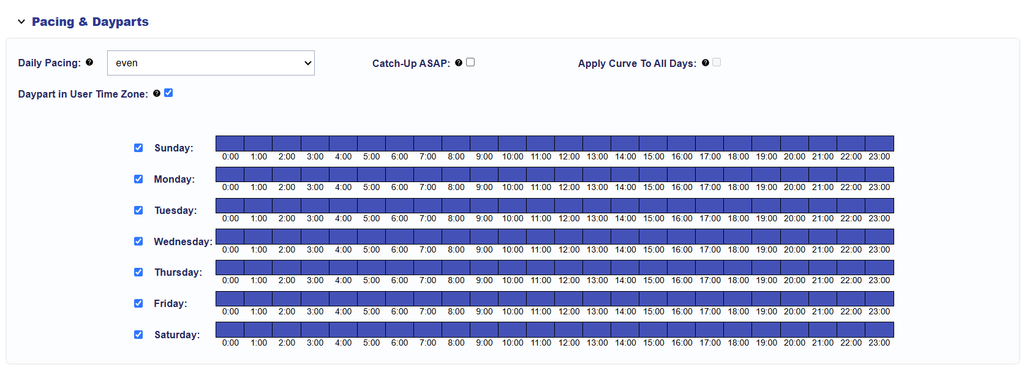
Pacing & Dayparts Section

If Mange Dayparts is enabled on the Campaign Template Setup section and you want to edit the Pacing & Dayparts section of the Campaign Template, follow these steps:

  1. Navigate to the Pacing & Dayparts section within the Campaign Template.
  2. Make the necessary changes.
  3. Select Submit when all Template edits are complete.

For additional configuration details, see Campaign Pacing & Dayparts

Frequency & Recency Section

If Enable Campaign Frequency is enabled in the Campaign Template Setup section:

  1. Navigate to Frequency & Recency.
  2. Update the applicable Frequency and Recency settings.
  3. Select Submit when all Template edits are complete.

For additional details, see Campaign Frequency & Recency

Targeting Section

The Targeting section allows the Campaign-level targeting stored in the Template to be reviewed or updated.

  1. Navigate to the Targeting section within the Campaign Template.
  2. Select Edit Targeting.
  3. Update the applicable targeting settings.
  4. Select Save in the targeting window.
  5. When all Template edits are complete, select Submit to save the Campaign Template.

For details on available targeting options, see Campaign Targeting

Clone a Campaign Template

Cloning allows users to create a variation of an existing Campaign Template without modifying the original.

To clone a Campaign Template:

  1. Open the Campaign Template you want to clone.
  2. Select Clone in the upper-right corner.
  3. Enter a new name for the cloned Template.
  4. Adjust the Campaign Template settings as needed.
  5. Select Submit.

The cloned Campaign Template is then available for use when creating future Campaigns.

For instructions on using the Template to create a Campaign, see Use a Campaign Template to Create a New Campaign.

Line Templates

Line Templates allow users to save and reuse individual media buying strategies. Users can create Custom Line Templates or use Public Line Templates provided by Pontiac.

Use a Line Template to Create a New Line

Saved Line Templates can be used when creating a new Line within a Campaign. Depending on the available Templates, users can select a Custom Line Template created for the Seat or a Public Line Template provided by Pontiac.

To create a new Line from a Template:

  1. Navigate to the applicable Campaign.
  2. Expand the Line Templates section.
  3. Locate the desired Template and select its icon.
  4. A new Line will be created using the settings stored in the Template.
  5. Review the resulting Line configuration and make any Campaign-specific adjustments.
  6. Save the Line when configuration is complete.

Templates provide a starting configuration. Before launch, review applicable budgets, bids, Deals, targeting, pacing, frequency settings, and other Line requirements to confirm they are appropriate for the new Campaign.

For additional details, see Create a Line From Template.

Public Line Templates

Public Line Templates provide a ready-made starting point for common publisher and inventory strategies. Instead of manually selecting every Deal, bid, and targeting setting, users can select a Public Line Template and begin with a configuration already created by the Pontiac team.

Depending on the Template, the Line may include:

  • Relevant Deals
  • Advanced bid prices
  • Inventory targeting
  • Publisher-specific configuration
  • Other settings associated with the selected strategy

Users can use the resulting Line as configured or make adjustments before launch.

Available Public Line Templates include:

  • 843 – Spectrum
  • 868 – ESPN
  • 869 – Channel-Network Targeted (Sports Streaming)
  • 870 – NFL
  • 871 – NBA
  • 872 – MLB
  • 873 – College Football 2025
  • 874 – NFL Live
  • 875 – Roku
  • 876 – Fire TV
  • 877 – Paramount
  • 878 – Samsung
  • 879 – Sling
  • 880 – Pluto
  • 881 – Tubi
  • 882 – Fubo
  • 883 – Philo
  • 884 – Scripps
  • 885 – DirectTV
  • 895 – News & Weather
  • 896 – Entertainment
  • 897 – Discovery
  • 898 – Food & Home Channel-Network
  • 907 – Channel-Network Various
  • 909 – High Transparency (Deals with over 80% transparency)

Create a Line Template

Custom Line Templates can be created from an existing Line or from a newly configured Line. Save a Line as a Template when you expect to reuse the same strategy, targeting, bidding, or other configuration in future Campaigns.

To save a Line as a Template:

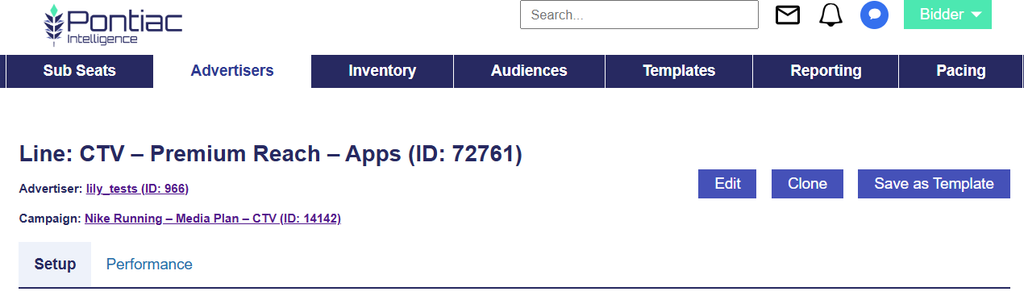
  1. Navigate to the Line page of the Line you want to use as a Template or create a new Line.
  1. Select the Save as Template button located at the top right corner.
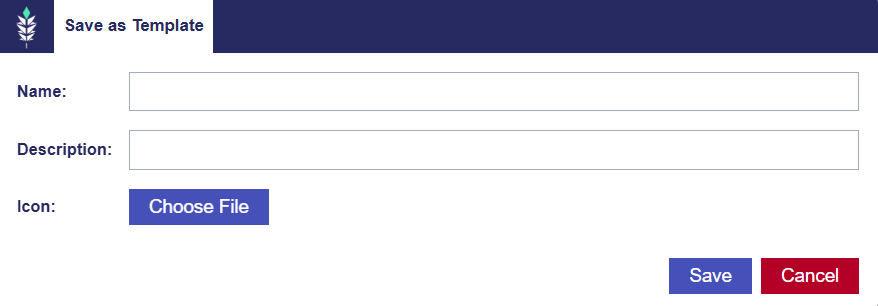
  2. Enter a Name, Description, and Icon for the Line Template.
    • All three are required and the Icon must be a 1:1 aspect ratio.
  1. Select Save to save the Line as a template.

You can now use this template later to create a new Line with the same structure. This will help save time, reduce mistakes, and ensure consistency in Line setup. Manage all Campaign and Line Templates on the Seat Level in the Templates tab. For more details, refer to the Create Line from Template documentation.

Find and Manage Line Templates

Saved Line Templates are managed at the Seat level.

To locate an existing Line Template:

  1. Navigate to the Templates tab.
  2. Expand the Line Templates section.
  1. Locate the Template by its Name, Description, or Icon.
  2. Select the Template Name to open and review its saved configuration. From the Template page, users can View, Edit, or Clone the Template.
    • Changes made to a saved Template will apply when the Template is used to create future Lines; they do not update Lines that were previously created from the Template.

Edit a Line Template

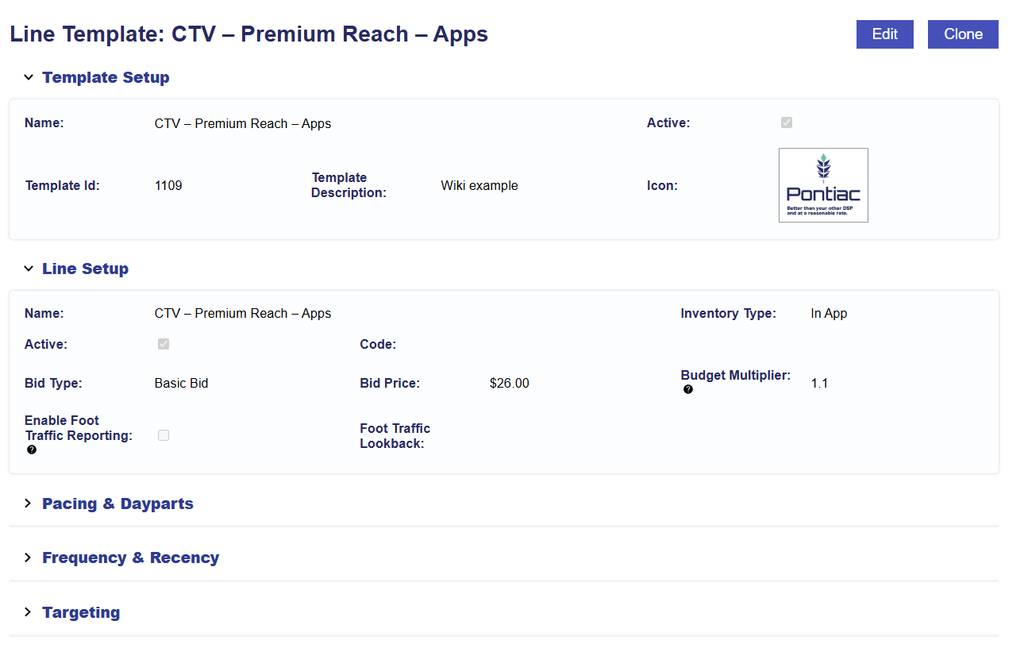
Select Edit from the applicable Line Template to update the configuration that will be used when creating future Lines.

Setup Section

In the Setup section, edit the following fields:

  • Name: Enter a unique name for your new Line Template to identify it easily.
  • Inventory Type: Web, In App, Combined
  • Active Status: Check the ‘Active’ box if you want the Line to be live, but uncheck it if you want to create an Inactive Line or to pause the Line.
  • Code: Optional and for reporting purposes.
  • Bid Type:
    • Basic Bid: Standard bid price applied across all inventory of the Line.
    • Bid at Floor Price: The maximum bid price and CPM floor allowed for an auction.
    • Advanced Bid Controls: A feature that allows setting a maximum bid price for Deals, giving more control over bid adjustments and spending limits.
  • Bid Price: The bid price determines how much you are willing to spend based on the selected bid type. For Advanced Bid Controls, set a Default Bid Price and custom bid prices. Deals must be associated at the Campaign and Line level to allow for custom bid prices. When new Deals are added to the Line if a custom bid is not set, the bid price will default to the value set in the Default Bid Price field on the Line.
  • Budget Multiplier: This feature allows the user to specify a multiplier on the daily budget. For example, setting a 1.1 multiplier will allow the Line to adjust the daily budget up to 110% of its typical daily budget. The new daily spend is calculated as Budget Multiplier x Daily Budget = New Daily Spend. Keep in mind, the daily budget may adjust based on pacing, and the actual daily spend could exceed the set multiplier.
  • Enable Foot Traffic Reporting: Foot Traffic Reporting allows you to enter specific commercial addresses and track whether users that were served your Ads visited those locations.
  • Foot Traffic Lookback: Set the time window for tracking foot traffic data.
  • Template Description: A brief explanation that helps you and other users understand the purpose of the Template.
  • Icon: An image that makes the template easily identifiable, helping users quickly recognize it.

Pacing & Dayparts

If ‘Manage Dayparts’ is NOT enabled on the Campaign Template Setup section and you want to edit the Pacing & Dayparts section of the Line Template, follow these steps:

  1. Navigate to the Pacing & Dayparts section within the Line Template.
  2. Make the necessary changes to the Pacing & Dayparts settings. Refer to the documentation page to review available Pacing & Dayparts options: Line Pacing & Dayparts
  3. If you have finished editing the Template, click the ‘Submit’ button in the top right corner of the page to save and apply all changes. If you do not want to apply the edits, press ‘Cancel’ to discard changes and revert the Campaign to its previous settings. To continue making edits, proceed to other sections.

If ‘Manage Dayparts’ is enabled on the Campaign Template Setup section and you want to edit the Pacing & Dayparts section of the Line Template, follow these steps:

  1. Navigate to the Pacing & Dayparts section within the Campaign Template that the Line belongs to.
  2. Edit the Campaign Template and uncheck the ‘Manage Dayparts’ box to enable Line Level control.
  3. Once disabled, go to the Line Template and update the Pacing & Dayparts settings. Refer to the documentation page to review available Pacing & Dayparts options: Line Pacing & Dayparts
  4. If you have finished editing, click the ‘Submit’ button in the top right corner of the page to save and apply all changes. If you do not want to apply the edits, press ‘Cancel’ to discard changes and revert the Line to its previous settings. To continue making edits, proceed to another section.

Frequency & Recency

If the ‘Enable Line Frequency’ feature is checked in the Line Template Setup section and you want to edit the Frequency & Recency section of the Line Template, follow these steps:

  1. Navigate to the Frequency & Recency section within the Line Template.
  2. Make the necessary changes to the Frequency & Recency settings. Refer to the documentation page to review available Frequency & Recency options: Line Frequency & Recency
  3. If you have finished editing the Template, close the window and click the ‘Submit’ button in the top right corner of the page to save and apply all changes. If you do not want to apply the edits, press ‘Cancel’ to discard changes and revert the Line Template to its previous settings. To continue making edits, proceed to other sections.

Foot Traffic Reporting

If the ‘Enable Foot Traffic Reporting’ feature is checked in the Line Template Setup section and you want to edit the Locations of the Line Template, follow these steps:

  1. Navigate to the Foot Traffic Reporting section within the Line Template.
  2. Add or delete Locations using one of the below methods. Refer to the following documentation for instructions on setting up a new location using each method: Line Foot Traffic Reporting
    • Address
    • Latitude Longitude (Lat Long)
    • Geofence
    • Bulk Upload
  3. If you have finished editing the Template, close the window and click the ‘Submit’ button in the top right corner of the page to save and apply all changes. If you do not want to apply the edits, press ‘Cancel’ to discard changes and revert the Line Template to its previous settings. To continue making edits, proceed to other sections.

Targeting

To edit the Targeting section of a Line, follow these steps:

  1. Navigate to the Targeting section within the Line Template.
  2. Click ‘Edit Targeting’ to modify targeting settings.
  3. Make the necessary changes to the targeting settings. Refer to the documentation page to review available targeting options: Line Targeting
  4. Click ‘Save’ in the bottom right corner of the popup window to apply all changes. To discard changes and revert to the previous settings, click ‘Cancel’.
  5. If you have finished editing the Template, close the window and click the ‘Submit’ button in the top right corner of the page to save and apply all changes. If you do not want to apply the edits, press ‘Cancel’ to discard changes and revert the Line Template to its previous settings. To continue making edits, proceed to the other sections.

Clone a Line Template

Select Clone when you want to create a new variation of an existing Line Template without modifying the original.

  1. Open the Line Template you want to clone.
  2. Select Clone.
  3. Enter a new Template Name.
  4. Adjust the settings as needed.
  5. Select Submit.

The Line Template is now ready to be used when creating a new Line. Refer to the following documentation for more details on this process: Create Line from Template

© 2026 Pontiac Wiki Sec · All Rights Reserved · Developed by RDK

  • Contact Us
  • Privacy Policy
  • Terms & Conditions
  • Pontiac.media